

Nallapati Ankamma Chowdary
The patriarch of the family is Nallapati Ankamma Chowdary who had long served as Munsif of the village Jonnalagadda ( Head of the village) where he initiated several welfare measures for the benefit of poorer sections of the people. Many of these programmess were continued by the family until recently. These include donation of residential plots, financial assistance for building houses and for marriages of girls, providing Mangalasutras for wedding (sacred threads with golden coins symbolizing prosperity and longevity in the relationship), etc
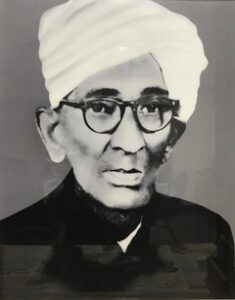
Nallapati Venkataramaiah Chowdary
(01 March, 1901 – 28th June, 1983)
Shri Venkataramaiah Chowdary was the first person to be educated from the village of Jonnalagadda and rise to the level of barrister of law. Coming from humble beginnings of a farming community, he faced immense discrimination from a so-called elite group of fellow lawyers of the Narasaraopet Bar Association. However, his determination to work hard and excel placed him on a high pedestal. With his command over the Law and presentation of arguments at the Bench, he soon endeared himself to the judicial community and even political circles. He was elected to be a Municipal Councillor and then Taluq Board President. He also served as Standing Counsel for the prestigious Andhra University. Being a talented orator, his rise in the political hierarchy of the Congress Party was quite fast and he was soon rubbing shoulders with stalwarts like Tanguturi Prakasam, popularly known as Prakasam Pantulu, who was the Premier of the Madras Presidency and later Chief Minister of the newly carved Andhra state. Venkataramaiah was elected the first Speaker of the Andhra State (1953-54) with its capital in Kurnool. His straight-forwardness and unwavering commitment to principles, however, were not appreciated and differences cropped up making it untenable for him to continue in the Congress Party. He joined other prominent leaders like Chakravarti Rajagopalachari, Minoo Masani, Piloo Mody and Prof. N. G. Ranga to form the Swatantra Party, as a liberal, democratic party rooting in market economy, in opposition to socialist Congress Party. The popularity of the newly formed Swatantra Party has grown fast to become the single largest opposition party to the Congress in the Fourth Lok Sabha (Lower House of Parliament) during 1967-71. It emerged as the main opposition to the dominant Congress in four states: Bihar, Rajasthan, Gujarat and Orissa. Shri Venkataramaiah was not only a jurist, nationalist and politician but also social reformer who tried to bring governance to the door steps of common people and extended free legal assistance to needy persons.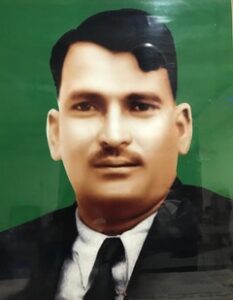
Nallapati Venkateswarlu Chowdary
(15 July 1918 – 12 July 1980)
Shri Venkateswarlu Chowdary had followed his elder brother, Shri Venkataraamaiah’s footsteps to become a lawyer and a politician with deep commitment to social justice and welfare.
Nallapati brothers, Venkataramaiah and Venkateswarlu, were the shining stars of the political arena of the Andhra state in the 1950s, who made untiring efforts for the development of the newly formed state.
He was elected to be the President of Guntur District Board, which is now known as Zilla Parishad, and later Member of the Legislative Council (upper house) of the Madras Presidency.
His contribution to development of education in the district was well recognized and remembered in the region. Large number of schools were established in all major villages, a move that was severely criticized at that time as centers to produce “clerks” in government departments.
These schools, however, made education easily accessible to students, who otherwise had to walk several kilometers to reach institutions in other areas. Hundreds of jobs of teachers were created for the new schools. Many of the students, who studied in these schools, later grew up to reach higher positions in different fields.
As Lawyer and President of the Bar Association, he groomed many young lawyers to establish themselves in the profession. He also offered free legal assistance to all needy people.
Despite being a successful lawyer and busy politician, he never lost touch with farm cultivation. He cycled to his fields every day at 4 pm when he was in town and spent entire day on Sundays to personally attend to farming activity.
He married to Ramatharakam at a very young age of 18 years as was the common practice of the time. She had been his real strength as she ably supported his varied activities, besides taking care of the family. They have four sons, Venkata Rattaiah, Siva Rama Chandrasekhar Rao, Laxmi Narayana and Ankineedu Prasad.
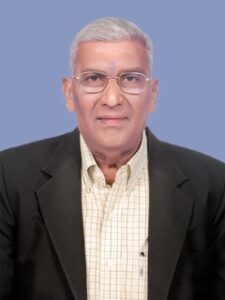
Nallapati Venkata Rattaiah
(31 July 1941 – 09 February 2013)
Shri Rattaiah, eldest son of Shri Venkateswarlu Chowdary, graduated from Manipal University in Civil Engineering and initially worked for Bharat Heavy Electricals Ltd (BHEL) in Hyderabad and Bharat Heavy Plate & Vessels Ltd (BHPV) in Visakhapatnam.
At a critical juncture of his early career, his ambitions carried him to test his entrepreneurial skills. His initial projects revolved around building and developing infrastructure for newly set up defense labs under the Defense Research and Development Organization (DRDO).
Having gained confidence, he soon moved into building residential communities creating a new trend. He roped in best architects of Mumbai to build Hyderabad’s first “green high-rised gated community” in about seven acres of land. Divya Shakti Apartment Complex, at the intersection of Begumpet and Ameerpet, which continues to be the landmark in the area, even after 40 years.
Industry was his next testing ground. Granite was a new, fledgling business at that time with high export potential. He created a full supply chain of mining, cutting & polishing and export. With distribution stores in over seven states of the USA, the company became one of the major players.
In recognition of his contribution to the economic growth of the state, Rattaiah was honoured with `Special Export Performance Award’ consecutively for the years, 2000-2001 and 2001-2002, by the Ministry of Commerce, Govt of India.
Shri Rattaiah is not only a successful businessman, but also an educationist and philanthropist. He was founding member of the well-known Vignana Jyothi Institute of Engineering and Technology in Hyderabad.
He liberally donated funds for setting up of hostels for boys and girls and giving scholarships to needy students. He also contributed to development of Sanskrit Vedic schools. He helped build `Swamy Dakshinamoorty’ temple at Kotappakonda, the holy hill and seat of Sri Trikoteswara Swami Temple. It is a famous pilgrimage centre.